Vivāha | The Adriatic Coast
How to Plan a Hindu Wedding in Croatia: Old Stone, Clear Water
On keeping a Vedic marriage along the Adriatic: the walled stone of Dubrovnik, the Roman heart of Split, the quiet Dalmatian islands, and an honest account of a coast that is lovelier and less trodden than its better-known neighbours.
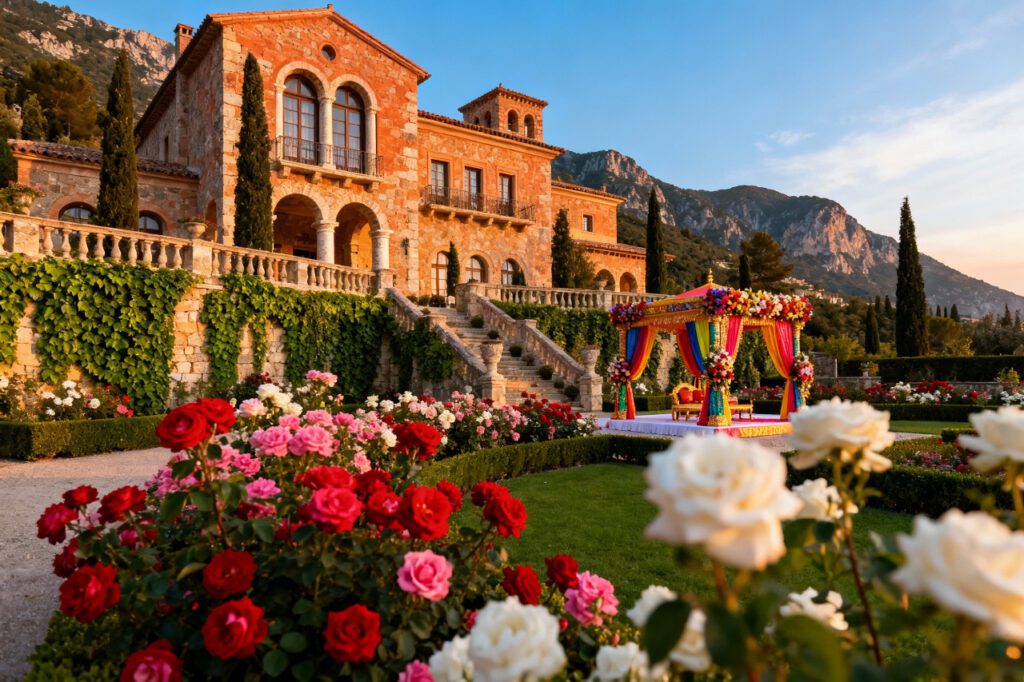
Among the places a family might consider for a Vedic marriage, the Adriatic coast of Croatia is one of the quietest pleasures, and learning how to plan a Hindu wedding in Croatia is largely a matter of discovering how much the country offers for how little it asks. The coastline is a long ribbon of pale stone meeting clear water, the old cities are medieval and Roman rather than rebuilt, the summers are warm and reliable, and the costs sit below those of Italy or France for settings of comparable beauty. It is, for the family willing to look a little off the well-worn path, a genuinely rewarding choice.
This guide walks through the practical shape of such a celebration: the three regions worth considering, the seasons and the way guests actually reach the coast, the handling of the sacred fire and the legal side, and the way the days themselves unfold. Like any destination far from where guests live, a wedding on the Adriatic is real work to arrange, and it suits the family that genuinely wants this particular coast rather than one merely choosing it for novelty. For those it suits, it suits beautifully.
Dubrovnik and the Southern Coast
Dubrovnik is the jewel, and the obvious starting point. The walled old city, its limestone bastions rising straight from the sea, is among the most striking settings in all of Europe, and the cluster of historic stone palaces around it that open for private celebrations place a marriage within architecture of real grandeur. South along the Pelješac peninsula lie vineyards and country estates and private island residences, all within reach of Dubrovnik’s international airport, which makes the region the easiest of the three for guests arriving from across the world.
Two honest cautions. Dubrovnik is the most expensive part of the coast at the height of summer, and from June through September the old city fills with cruise-ship visitors, which can press on the atmosphere of a celebration kept too close to its centre. The wiser choice is often a private estate on the peninsula or a nearby island, near enough to the airport for ease but far enough from the crowds for peace. The peninsula in particular rewards the family that looks beyond the city walls, its wine estates and quiet stone villages offer the same Dalmatian beauty without the press of visitors, and a celebration kept there gains a seclusion the old city cannot give in high season. For the deeper meaning of the rite these settings will hold, the treatment of the Vivāha Pūjā is worth reading before the planning begins.
Split and the Central Coast
An hour or two up the coast, Split offers a different and often gentler option. Built around the vast palace of a Roman emperor, the city carries its antiquity more casually than Dubrovnik and costs noticeably less. The Trogir area just to the north holds historic stone manors and private estates well suited to a celebration across several days, and the larger pool of mid-sized properties around Split gives a family more room to find the right fit for their numbers and budget than the higher-end Dubrovnik market does.
Split is also a natural base for combining the mainland with the islands, since regular ferries link it to Brač, Hvar, and the closer Dalmatian isles. A family might keep the celebration at a mainland estate and send guests on an island excursion in the days around it, or keep the whole event on an island reached easily from the Split ferry port. The city’s own airport, smaller than Dubrovnik’s but well connected across Europe in summer, makes Split a practical hub for a gathering whose guests come mostly from the continent rather than further afield. For the comparison of Croatia against the continent’s other coasts, the survey of Hindu wedding destinations in Europe sets each beside the others.
The Islands: Hvar, Brač, Korčula
For families who want seclusion above all, the Dalmatian islands are the most undisturbed settings the country holds. Private estates on Hvar, Brač, and Korčula increasingly open for several days of exclusive use, and an island celebration has a quality of privacy and stillness that no mainland venue quite matches. The trade is logistical: guests reach the islands by ferry from Split or Dubrovnik, which needs careful coordination, and the smaller scale of island properties favours an intimate gathering, under a hundred or so, rather than a very large one.
For the right family, this is a feature rather than a limit. A smaller, more intimate celebration on a quiet island, the whole party arriving together by boat, staying together on a single estate, celebrating together over several unhurried days, has a closeness that a grand mainland event cannot reproduce. The islands each have their own character, too: Hvar the most fashionable and lively, Brač the closest and easiest from Split, Korčula the quietest and most medieval of the three, so the choice can be matched to the mood a family wants. The honest question is simply whether your numbers and your guests’ willingness to travel suit the island scale; if they do, few settings anywhere are lovelier.
A long ribbon of pale stone meeting clear water, lovelier and less trodden than its famous neighbours. The Adriatic asks little and gives much.
The Seasons of the Coast
The Adriatic has a long and generous season, which is part of its appeal. From May into early June the coast is warm, green, and uncrowded, the light soft and the sea already swimmable, and this is among the loveliest windows for a celebration, before the high-summer crowds and heat arrive. September and October mirror it on the other side, the sea still warm from the summer, the visitor crush easing, the evenings mild and clear, and many families find these shoulder months the sweet spot of the whole year.
High summer, July and August, brings the most reliable sun but also the strongest heat, the largest crowds in Dubrovnik and on the popular islands, and the peak of prices, so a summer wedding is best kept on a private estate or a quieter island rather than in a thronged old town. It is also the season of the one genuine seasonal caution worth weighing, the wildfire risk that runs high along this coast in the driest weeks, which bears directly on the sacred fire and is treated in the section that follows. Winter is mild by northern standards but too cool and changeable for the open-air heart of a Vedic celebration, so the working season runs, in practice, from May to October.
Getting There, and Moving Around
A coast strung along the sea and scattered with islands rewards a little thought about travel, since this is where an Adriatic wedding asks the most of its guests. The two international gateways are Dubrovnik in the south and Split in the centre, both well connected across Europe in the warm months, with Zagreb inland serving as a further hub for connections. Guests coming from outside Europe will generally route through a major European city and on to one of the coastal airports, so it is worth telling them early which airport the celebration is built around, and choosing a venue within a comfortable transfer of it.
If the celebration is on an island, the ferry becomes part of the plan rather than an afterthought. Car ferries and faster catamarans run frequently from Split and Dubrovnik in summer, but they fill quickly in high season and keep to timetables that a wedding party must be organised around, so block bookings and a clear schedule sent to guests in advance are well worth the trouble. For the elderly and for guests travelling with small children, the extra leg by sea is the part of the journey to plan most gently. None of this is difficult; it simply wants doing early, in writing, so that the coast’s one real demand, its geography of water and islands, becomes part of the celebration’s charm rather than a strain on the day.
The Fire and the Practicalities
The sacred fire is the heart of the rite and the one practical matter to settle early. Outdoor estates along the Dalmatian coast generally accommodate it without difficulty, particularly in the dry summer, and the open courtyard or garden setting is also the one that allows the largest gathering around it. The one genuine seasonal caution is wildfire risk, which runs high along this coast from late June into early September; in those weeks local fire-safety rules can restrict open flame near vegetation without a permit, so the priest and planner coordinate the fire’s setting with the venue and, where needed, the local authorities in advance. A contained vessel set on stone or a cleared paved area, away from dry vegetation, satisfies both the rite and the safety rules without difficulty, and a venue used to summer celebrations will already know its own ground.
On the law, the position is the familiar one for a destination celebration. Croatia recognises only civil marriage at a registry office as carrying legal status, and for foreign couples the Croatian civil process means apostilled and translated documents and a presence requirement, so the simpler path is almost always to complete the legal registration at home before travelling. The Vedic ceremony on the Adriatic is then purely the wedding the family came for. The honest point to hold: the legal step must be done somewhere, and the religious rite alone does not produce legal recognition where you live. Plan for both, settle the legal side early, and the celebration itself carries no anxiety about it.
The Days, and the Food
A celebration here unfolds across three or four days, helped by the long, dependable warmth of the May-to-October season: the music evening to welcome the gathered guests, the henna afternoon on a terrace above the water, the turmeric morning, the marriage itself in the late part of the day under the canopy, and the leave-taking on the last morning. The Mediterranean light of the coast gives the whole sequence a glow that needs little dressing, and the warm dry evenings make the open-air parts of the celebration easy. The marriage at the heart of it runs two to three unhurried hours under the canopy before the sacred fire, with the seven steps at its centre and the priest translating each gesture, so that every guest, familiar with the tradition or not, can follow what is happening.
On food, the coast is more capable than it is given credit for. Indian caterers travel to Croatian celebrations from Zagreb, Split, or further afield, and the local kitchen, with its abundance of vegetables, pulses, herbs, and good oil, blends happily with Indian cooking into a vegetarian feast that serves both the family’s traditions and the local guests. The mild Mediterranean palate and the Indian one meet without strain, and a skilled caterer can produce a wedding meal that everyone present remembers. Where a family keeps strict dietary discipline, vegetarian and without onion or garlic, it is worth confirming early that the chosen caterer can meet the standard, since this is far easier settled in advance than discovered on the day.
A wedding on the Adriatic is the same wedding kept anywhere: the fire, the seven steps, the vows truly spoken, here against old stone and clear water.
yad etad hṛdayaṃ tava
tad astu hṛdayaṃ mama
“That heart which is yours, let it be my heart too.” A vow of the marriage rite, joining two hearts as one.
FROM THE VIVĀHA RITE — THE UNION OF HEARTS
The old verse on the joining of two hearts holds what every part of the planning is finally in service of. The walled stone and the clear water, the estate on the peninsula or the quiet island, the warm evenings and the shared feast, all of it is the setting for that one simple thing, two hearts becoming, by the vows spoken before the fire, a single heart and a single home. The Adriatic gives this founding a frame of unusual beauty and asks remarkably little in return. For the family drawn to its pale cities and bright water, a marriage kept here, prepared with care and held with love, is a thing remembered fondly for the whole of the long shared life it begins.
The verse cited here is the “union of hearts” mantra of the Hindu marriage rite, preserved in the Gṛhya and Paddhati wedding tradition, with the wedding texts gathered at Sanskrit Documents and the WisdomLib library, with scholarship on the rite available through the Oxford Centre for Hindu Studies.
© 2026 AUSTRIAVIENNAPUJA.COM — SANĀTANA DHARMA IN EUROPE
Preserving authentic Vedic transmission across the European continent