Vivāha | On the Catalan Coast
Hindu Wedding Ceremony in Barcelona: A Real Guide
A practical guide to keeping a Vedic wedding in and around Barcelona: what the city and coast offer, choosing between beach, estate, and countryside, the sacred fire and the Catalan rules that govern it, the legal step in Spain, the auspicious hour, and what to settle first.
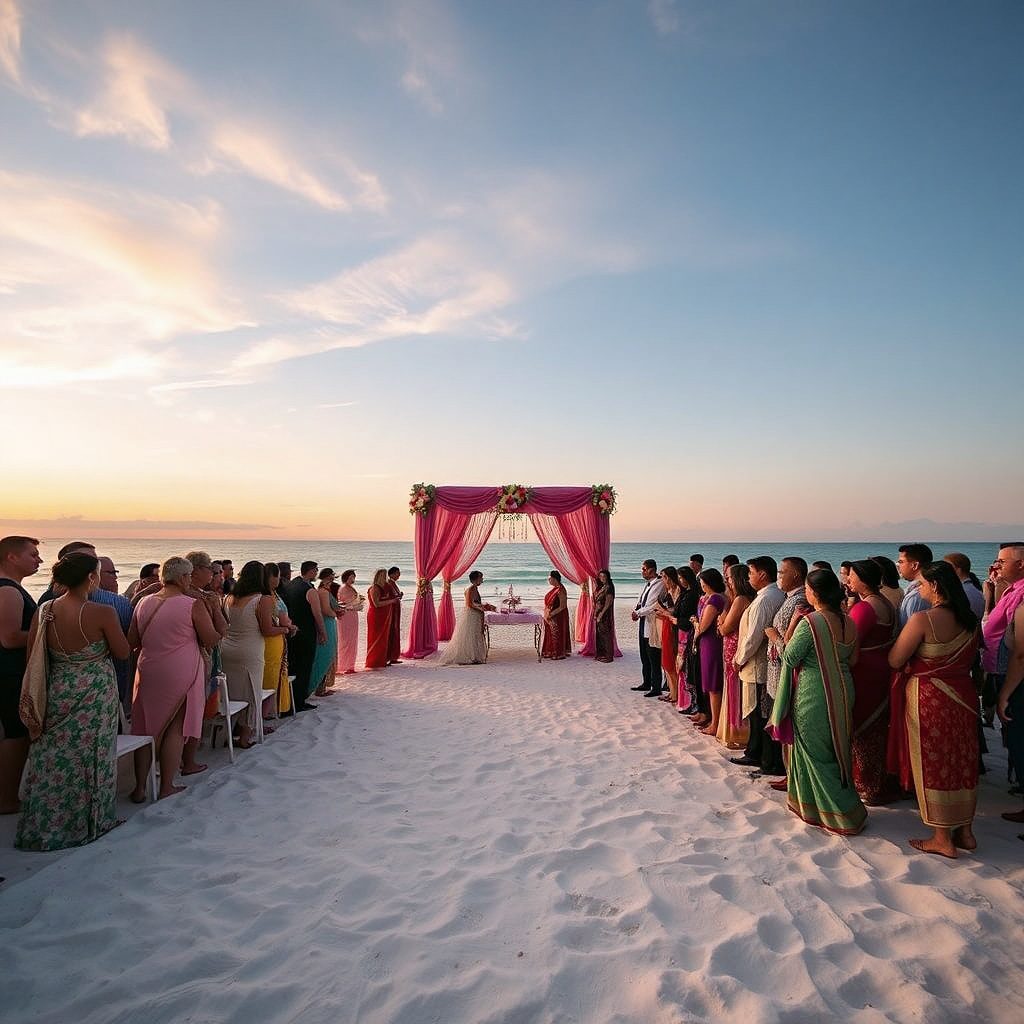
A Hindu wedding ceremony in Barcelona sets the Vedic rite against one of the most striking backdrops in the Mediterranean: the warm stone of the old city, the long Catalan beaches, the green estates rising into the Collserola hills behind. Couples are drawn here for the setting, and rightly so. But a wedding is more than its backdrop, and the practical questions, where exactly to hold it, whether the fire is permitted, how the legal side works, when the auspicious hour falls, are what decide whether the day runs smoothly. This guide answers them plainly, so a couple can plan with confidence rather than discover the obstacles late.
Why Couples Choose Barcelona
Barcelona offers something few destinations combine: a major international airport with direct flights from across Europe and beyond, a city of real beauty and culture for guests to enjoy around the wedding days, and within a short drive both Mediterranean coastline and quiet wine-country estates. For a gathering whose guests are travelling from several countries, the ease of arrival alone is a strong argument, and it sets Barcelona apart from the smaller Greek islands or remote countryside venues that ask a longer journey of everyone.
The city also carries an easy familiarity with celebration and ceremony. Catalan culture takes festivals, processions, and long shared meals seriously, and a Hindu wedding held here is received as one more form of something the region already understands rather than as something alien. The wider picture of how Spain sits among the European options is set out in the guide to a Hindu wedding in Spain.
The backdrop draws couples here. The practical questions, fire, law, venue, timing, decide whether the day runs without strain.
City, Coast, or Countryside
The Barcelona area offers three broad kinds of setting, and the choice between them shapes much of what follows. The coast, the beaches of the city itself and the resort stretches north toward the Costa Brava and south toward Sitges, gives the sea-facing ceremony many couples picture, with the canopy raised on sand or a seafront terrace. Beach settings are beautiful and exposed, which matters greatly for a fire ceremony, since the sea breeze rises through the afternoon and the canopy must be placed and screened with that in mind.
Inland, the masías and wine estates of the Penedès and the hills behind the city offer enclosed gardens and courtyards that are easier for a contained fire and often more self-contained for a multi-day celebration, with rooms on the grounds. The city itself offers hotel terraces and event spaces with the skyline as backdrop, the most convenient for guests but the most restrictive for an open flame indoors. None is the right answer for everyone; the coast suits the couple set on the sea, the estates suit the larger or longer gathering, and the city suits those who want their guests never far from a hotel bed. The questions to test any of them against are set out in the guide to choosing a European venue.
The Sacred Fire and the Catalan Rules
The sacred fire is the heart of a Vedic wedding, the witness before whom the vows are sworn, and it cannot be replaced by a symbolic or electric flame. This makes it the single most important practical matter to settle early in Barcelona, because Catalan and Spanish public-safety rules govern open flame at venues, and the answer differs by setting. The fire is kindled in a contained metal vessel set on a fire-resistant base, with adequate ventilation indoors and careful placement against the wind outdoors, and with the venue’s own protocols observed. These are ordinary accommodations, not compromises of the rite.
Two cautions are worth naming. Outdoor estates and gardens generally permit a contained fire readily, but Catalonia, like much of the Mediterranean south, carries a heightened wildfire risk in the dry height of summer, and in those weeks the arrangement may need coordinating with the venue and local rules. Indoor venues remove the wind but introduce smoke detection and ventilation requirements, since the offerings produce fragrant smoke. The single non-negotiable step is securing the venue’s written permission for a contained open flame, indoors or out, before the booking is confirmed rather than assumed. A priest experienced across European venues handles this conversation with the property directly.
The Legal Step in Spain
Spain recognises only the civil marriage performed before its own competent authority as legally binding. The Vedic ceremony is the religious and spiritual heart of the occasion and does not by itself produce a marriage that Spain or a couple’s home country will register in law. For non-resident couples the Spanish civil process can be involved, frequently touching on apostilled and translated documents and residence considerations, and the requirements change from time to time, so they should be confirmed with the relevant authority or a qualified professional rather than assumed. This is general information and not legal advice.
In practice most couples find it simplest to complete the legal marriage quietly at home before they travel, which leaves the Barcelona day free to be the Vedic rite and the celebration, unburdened by paperwork. Settled this way, the legal step becomes a small administrative task done in advance rather than a complication hanging over the wedding itself.
The Auspicious Hour, Calculated for Barcelona
The hour at which the marriage is solemnised is chosen, not simply picked for the light, and for a Barcelona wedding it must be calculated for the local coordinates rather than borrowed from an Indian almanac, since the reckoning of the auspicious window depends on local sunrise and the positions of the heavenly bodies as seen from the place of the rite. A wedding in Catalonia does not inherit its hour from India; it is computed afresh for the longitude at which it is held. For a wedding the birth charts of the couple are weighed as well, so the elected moment suits these two people and not only the act in the abstract.
This is why the priest should be engaged early, before the date is locked against the venue, since the favourable window and the couple’s preferred day do not always coincide and reconciling them takes room to work. The assessment of the two charts that precedes the wedding is treated in the discussion of Kundli matching for Hindu marriages, and the deeper meaning of the rite the hour is chosen for in the study of the Vivāha Pūjā.
Season and Getting Everyone There
The Barcelona climate favours the long warm season from late spring into autumn. May, June, September, and early October give the most comfortable conditions for an outdoor ceremony, warm but not fierce, with gentler crowds and pricing than the high summer. July and August are hot and busy along the coast, and a ceremony in those months is best set for the evening when the heat softens. The winter is mild by northern European standards but unreliable for an outdoor rite.
On reaching the wedding, Barcelona is among the easiest of European destinations: the airport takes direct flights from a wide range of cities, and guests arriving from across Europe and beyond rarely need more than one connection. Accommodation is plentiful in the city and along the coast, though an estate venue in the wine country will want its lodging thought through in advance, as the nearest hotels may sit some distance off. The earlier guests are given notice, the better, since the further they travel the more lead time they need to plan.
What to Settle First
Arranged in the right order, a Barcelona wedding holds together without strain. Engage the priest first, so the auspicious window is known before any date is committed. Decide between coast, estate, and city next, since that choice governs cost, logistics, and how the fire will be handled. Then confirm the venue, securing in writing both an unobstructed setting at your chosen hour and permission for a contained open flame. Fix the season toward spring or autumn where you can, give guests early notice, and settle the legal marriage at home before travelling. Built in this sequence, the day arrives as a celebration to be lived rather than an event to be managed.
The broader work of a priest who travels to keep these rites across the continent, of which a Barcelona wedding is one, is set out in the account of the Vedic priest serving Europe.
The Short Version
Choose coast, estate, or city by the gathering you have rather than the photograph you like. Confirm in writing that a contained sacred fire is permitted at your chosen setting. Have the auspicious hour calculated for Barcelona’s own coordinates, not borrowed from an Indian almanac. Settle the legal marriage at home before travelling. Engage the priest first and build the rest around what the rite needs. Aim for the spring or autumn shoulder season, and give your guests as much notice as you can.
The Catalan coast provides the frame. The fire and the seven steps provide the substance. Settle the practical things early and the setting takes care of itself.
sakhā saptapadā bhava
sakhāyau saptapadā babhūva
“With these seven steps, become my friend; by seven steps we have become companions for life.”
FROM THE SAPTAPADĪ OF THE MARRIAGE RITE
The words spoken after the seventh step name what the whole long sequence is finally for: not the coast, not the canopy, lovely as both are, but the friendship of two people now bound to walk one road together. A wedding kept well in Barcelona, with the fire rightly placed and the practical matters settled early, gives that friendship the firmest beginning the day can offer, and the Catalan setting lends its beauty to it freely.
SOURCES AND FURTHER READING
Primary and academic sources: the Āśvalāyana Gṛhya Sūtra on the marriage rite, the marriage hymn preserved at Sanskrit Documents, and scholarship on the domestic rites through the Oxford Centre for Hindu Studies.
© 2026 AUSTRIAVIENNAPUJA.COM · SANĀTANA DHARMA IN EUROPE
Preserving authentic Vedic transmission across the European continent